



The police rank structure in India ensures discipline and accountability. Whether you aim to join as a constable or an IPS officer, understanding police ranks, police post list, police promotion and Indian police ranks and salary helps you plan better and build a long-term career in law enforcement.
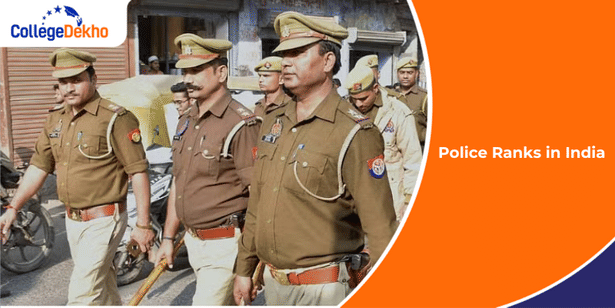
Police ranks in India are determined by the mode of recruitment and years of service at each level. The police rank structure includes posts such as Constable, Head Constable, ASI, SI, Inspector, DSP/ACP, SP/DCP, SSP and DGP, forming a clearly defined police post list across state and central forces.
Indian police services primarily include the IPS, DANIPS, and State Police Services (SPS). To enter different police ranks, candidates must clear competitive exams such as
UPSC CSE
, UPSC CAPF, SSC CPO, SSC GD, or state-level police recruitment exams. Eligibility conditions vary by post and authority.
As per government rules, police ranks are organised into four levels, each carrying a specific police star rank. Seniority and responsibility are reflected through insignia, ranging from 1 star police rank and 2 star police rank to the 4 star police rank held by the Director General of Police (DGP). The police promotion list follows a structured career progression based on service, performance, and departmental exams.
The Indian police ranks and salary structure differs across states and cadres, but senior officers can earn up to ₹22 lakh per annum. This article explains the complete police rank system, rank-wise responsibilities, insignia stars, and the police post list with salary in detail.
Also Read:
How to Become a Police Officer?
Levels for Police Ranks in India
Indian Police recruits candidates at four different levels for its ranks. Each level has its own set of eligibility criteria, training requirements, and responsibilities within the force. The four major levels of police posts are as follows:
- Constabulary
- Upper Sub-ordinate
- SPS (through the State Public Service Commission)
- IPS ( through Union Public Service Commission)

Complete Police Rank List in India & Their Responsibilities
To know the complete Police Rank List in India and details on their duties, reporting officers and level, read here:
Police Rank | Level | Resonsibilities | Reporting Panel |
|---|---|---|---|
Constable | Entry-Level | Patrolling, law enforcement, Crowd control and addressing minor complaints. | Head Constable |
Head Constable | Entry-Level | Supervises constables, assists with investigations, and maintains records. | Assistant Sub-Inspector (ASI) |
Assistant Sub-Inspector (ASI) | Middle-Level | Investigate minor cases, record statements, and gather evidence. | Sub-Inspector (SI) |
Sub-Inspector (SI) | Middle-Level | Leads investigations and supervises police station staff and cases. | Inspector |
Inspector | Middle-Level | Commands police stations and oversees all operations and investigations. | Deputy Superintendent of Police |
Deputy Superintendent of Police (DSP)/Assistant Commissioner of Police (ACP) | Senior-Level | Supervises multiple stations, plans operations, and handles critical cases. | Superintendent of Police (SP) |
Superintendent of Police (SP)/Deputy Commissioner of Police (DCP) | Senior-Level | Manages district operations, resource allocation, and crisis management. | Senior Superintendent of Police |
Senior Superintendent of Police (SSP) | Senior-Level | Oversees large districts or urban police operations and manages high-level cases. | Deputy Inspector General (DIG) |
Deputy Inspector General (DIG) | Top-Level | Supervises police operations across multiple districts and coordinates major policies. | Inspector General (IG) |
Inspector General (IG) | Top-Level | Leads zones or ranges, formulates strategies, and manages high-priority cases. | Additional Director General (ADG) |
Additional Director General (ADG) | Top-Level | Handles statewide jurisdiction and oversees large-scale operations. | Director General of Police (DGP) |
Director General of Police (DGP) | Top-Level | Heads the state police force, responsible for overall policy and strategy. | State Government or Home Minister |
Indian Police Hierarchy Explained
The Indian Police Service ranks are structured in a hierarchy that mirrors the organisation of the police force in India. This hierarchy is designed to establish a clear chain of command and authority. The organisation of police ranks in India is as follows:
Constable Rank in Indian Police
The rank of constable is the starting position on the police rank list in India. In some states, constables are referred to as 'Sipahi.' Upon recruitment, they are permitted to carry rifles, with arms training provided thereafter. As they gain experience, a constable can advance to become a senior constable and then be promoted to the rank of head constable. This progression offers three main positions within the police force.
- Constable
- Senior Constable
- Head Constable
Assistant Sub Inspector Rank in the Indian Police Department
Assistant Sub-Inspectors are recruited through competitive examinations organised by individual state governments for various ranks within the Indian police force. Each state in India conducts its own recruitment process and exams for various ranks within the police force. There are three main positions available within this rank:
- Assistant Sub-Inspector of Police (ASI)
- Sub-Inspector of Police (SI)
- Inspector of Police (PI)
Provincial/State Police Service Officers (PPS/SPS) Ranks
They are generally recruited through the State Public Service Commissions; these officers may later get promoted to IPS. Ranks include:
- Deputy Superintendent of Police (DSP)
- Additional Superintendent of Police (ASP)
- Superintendent of Police (SP)
- Senior Superintendent of Police (SSP)
Police Ranks in India: IPS
To join the Indian Police Service (IPS), you must first pass the UPSC Civil Services Examination. Once you pass this exam, you will be eligible to be appointed as an assistant superintendent. The IPS Rank progression is as follows: list.
- Assistant Superintendent of Police
- Additional Superintendent of Police
- Superintendent of Police (SP)
- Senior Superintendent of Police (SSP)
- Deputy Inspector General of Police
- Inspector-General of Police (IGP)
- Additional Director General of Police
- Director-General of Police (DGP)
Order-wise Police Rank List in India with Insignia & Stars
The Indian government follows a specific hierarchy when it comes to recruiting police ranks. This hierarchy involves various ranks and badges, which signify the authority and responsibilities of the officers. Below is a table displaying the rank-wise Indian police position list and their corresponding badges and police star rank.
Ranking | Police Rank (Lowest to Highest) | Stars on Uniform | Badge | Recruitment Method |
|---|---|---|---|---|
15 | Constable | No Star |
| |
14 | Lance Naik/ Havaldar | No Star - Single Strip |
| Direct Recruitment through the Police Recruitment Board |
13 | Havaldar/ Senior Constable | No Star - Three Strips |
| Promotion |
12 | Head Constable/Assistant Sub-Inspector (ASI) | One Star Police Rank, One Red Strip and One Blue Strip |
| Promotion/ Direct Recruitment through the Police Recruitment Board |
11 | Sub-Inspector (SI) | Two Star Police Rank, One Red Strip and One Blue Strip |
| Promotion |
10 | Inspector | Three Star Police Rank |
| Promotion |
9 | Deputy Superintendant of Police (Dy. SP) | Three Star Police Rank, One Red Strip and One Blue Strip |
| PPS recruited through the SPSC/IPS in the initial years |
8 | Assistant Superintendent of Police (ASP) | Three Star Police Rank & IPS Badge |
| IPS/PPS through promotion |
7 | Additional Superintendent of Police (ASP) | Ashok Emblem & IPS Badge |
| IPS/PPS through promotion |
6 | Superintendent of Police (SP) | Ashok Emblem, One Star & IPS Badge |
| IPS/PPS through promotion |
5 | Senior Superintendent of Police (SSP) | Ashok Emblem, Two Star & IPS Badge |
| IPS through promotion |
4 | Deputy Inspector General of Police (DIG) | Ashok Emblem, Three Star & IPS Badge |
| IPS through promotion |
3 | Inspector-General of Police (IG) | One Star, Cross Swords & IPS Badge |
| IPS through promotion |
2 | Additional Director General of Police (ADG) | Ashok Emblem, Cross Swords & IPS Badge |
| IPS through promotion |
1 | Director-General of Police (DGP) | Ashok Emblem, Cross Swords & IPS Badge |
| IPS through promotion |


Also Check: Police Post List with Salary Complete Guide
Police Post List with Salary (Updated as of 2025)
The table below contains the complete police position list, along with their respective annual salaries. Salaries are approximate and based on the 7th pay commission:Police Rank | Average Salary |
|---|---|
Inspector General of Police (IG) | INR 17.50 LPA |
Director General of Police (DGP) | INR 14- 17.5 LPA |
Senior Superintendent of Police (SSP) | INR 13.50 LPA |
Superintendent of Police (SP) | INR 10.60 LPA |
Additional Superintendent of Police (ASP) | INR 9 LPA |
Deputy Superintendent of Police (DSP) | INR 7 LPA |
Inspector | INR 6.50 LPA |
Sub-inspector | INR 5.30 LPA |
Head Constable | INR 4.20 LPA |
Constable | INR 3-4 LPA |
Also Check: UP Police Rank List 2025
Police Rank in IG vs Commissionerate System of Policing
There are some differences in the Police department ranks in the Inspector General (IG) and the Commissionerate system of policing. While the lower ranks in both systems are the same, differences in ranks arise at the level above the inspector rank due to more powers in the Commissionerate system. Check the police hierarchy in the commissionerate system from the table given below.
Police Rank in IG Police System | Police Rank in Commissionerate Police System |
|---|---|
Director-General of Police (DGP) | |
Additional Director General of Police (ADG) | Commissioner of Police |
Inspector-General of Police (IGP) | Additional Commissioner of Police |
Deputy Inspector General of Police | Additional Commissioner of Police |
Senior Superintendent of Police | Deputy Commissioner of Police |
Superintendent of Police | Additional Deputy Commissioner of Police |
Additional Superintendent of Police | Additional Deputy Commissioner of Police |
Deputy Superintendant of Police (Dy. SP) | Assistant Commissioner of Police |
Inspector | |
Sub-Inspector | |
Assistant Sub-Inspector | |
Head Constable | |
Constable | |
Related Links:
The police ranks in India are carefully structured to maintain discipline, accountability, and effective governance. Whether you aim to join as a constable, rise through state police services, or aspire to become an IPS officer, understanding the police rank list, star system, insignia, and salaries will help you plan your preparation and career with clarity.
In case of any queries on the topic Police Ranks In India, reach out to us on the
CollegeDekho QnA
zone. Also, please stay tuned to keep yourself updated on recruitment exams.
FAQs
In the police rank SP is a higher rank in the police ladder compared to the DSP rank.
Yes, the Assistant Sub-Inspector (ASI) rank in the Indian police service is indicated by a single star on their uniform, and is senior to Head Constables. The Superintendent of Police (SP) and Inspector-General of Police (IG) also have a single star on their uniform but are much senior than the Assistant Sub-Inspector (ASI) rank.
The police ranks in order of highest authority/seniority are as follows:
- Director-General of Police (DGP)
- Additional Director General of Police (ADG
- Inspector-General of Police (IG)
- Deputy Inspector General of Police (DIG)
- Senior Superintendent of Police (SSP)
- Superintendent of Police (SP)
- Additional Superintendent of Police (ASP)
- Assistant Superintendent of Police (ASP)
- Deputy Superintendant of Police (Dy. SP)
- Inspector
- Sub-Inspector (SI)
- Head Constable/Assistant Sub-Inspector (ASI)
- Havaldar/ Senior Constable
- Lance Naik/ Havaldar
- Constable
No, there is no 4-star police rank in India. The highest rank in the Indian Police Service (IPS) is Director General of Police (DGP), which is a 3-star rank. The DGP occasionally reports directly to the chief minister of the state and, in other cases, to the Chief Secretary of the state.
The Indian police ranks and salary have been mentioned below:
- Inspector General of Police (IG): INR 17.50 LPA
- Director General of Police (DGP): INR 14.30 LPA
- Senior Superintendent of Police (SSP): INR 13.50 LPA
- Superintendent of Police (SP): INR 10.60 LPA
- Additional Superintendent of Police (ASP): INR 9 LPA
- Deputy Superintendent of Police (DSP): INR 7 LPA
- Inspector: INR 6.50 LPA
- Sub-inspector: INR 5.30 LPA
- Head Constable: INR 4.20 LPA
- Constable: INR 3- 4 LPA
The police all post list include each and every police rank in India. As per the list, the lowest to highest police ranks in India are Constable, Lance Naik/ Havaldar, Havaldar/ Senior Constable, Head Constable/Assistant Sub-Inspector (ASI), Sub-Inspector (SI), Inspector, Deputy Superintendant of Police (Dy. SP), Assistant Superintendent of Police (ASP), Additional Superintendent of Police (ASP), Superintendent of Police (SP), Senior Superintendent of Police (SSP), Deputy Inspector General of Police (DIG), Inspector-General of Police (IG), Additional Director General of Police (ADG), and Director-General of Police (DGP).
No, the Central Government of India does not release a police promotion list. Promotion for every rank in the police rank list in India happens through a proper system and is done based on a candidate’s experience and time served in the Indian police force. Each rank on the police post list has its own set of eligibility criteria, training requirements, and responsibilities within the force.
The highest post in the police rank list is that of the Director-General of Police (DGP). The DGP occasionally reports directly to the chief minister of the state and, in other cases, to the Chief Secretary of the state. Other senior post in the police rank list include Additional Director General of Police (ADG), Inspector-General of Police (IG), Deputy Inspector General of Police (DIG), etc.
The state government of India defines the police post list in India by the legislatures and the rules. However, in the union territories, the Central government is responsible for controlling the police post list and salary through lieutenant governors of the union territories. The union government also has the power to establish any particular order regarding the police rank list in India if there is an emergency.
The Director General of Police (DGP) has the highest salary as per the other police ranks in India. The average salary of the DGP stands at INR 2,25,000 per month. The Additional Director General of Police (ADGP) makes INR 2,05,400 per month and the Inspector General of Police (IGP) makes INR 1,44,200 per month.
The Director General of Police (DGP) is higher in rank than an Inspector General of Police (IG) in the Indian police hierarchy. The DGP is typically the head of the police force of an entire state or union territory, while an IG is responsible for overseeing policing operations in a specific range of districts or zones within the state.
















Similar Articles
AP SSC Social Science Weightage 2026 Unit and Chapter-Wise Mark Distribution
Why IIT Delhi Research Internships Are a Big Opportunity for Students
Why HSSC CET Phase 2 Recruitment 2026 Is Crucial for Group C Aspirants
SAIL MT Admit Card 2026: What Candidates Should Check Before the Exam
How Students Should Plan Studies After Checking SEBA HSLC Exam Routine 2026
HPSC HCS Recruitment 2026: Why This Registration Window Is Important