

- We’re on your favourite socials!


 Popular
 Greater Noida (Uttar Pradesh)
 Gallery

Lloyd Business School recently organized a 'Management Summit 2020' on 15th February 2020 as a part of the Supply Chain Management (SCM) and Human Resource (HR) Conclave. Dignitaries from several corporates graced the occasion with their presence. The Summit was themed around the importance of matching up with the industry requirements for better career opportunities for students.
The primary aim of the Summit was to identify the different challenges and identifying means of accommodating these changes with the help of concepts of Strategic Business Management. The Summit included various Panel Discussions, Open Forums and Essay Competitions directed at establishing understanding and articulation of concepts.
The Management Summit at Lloyd Business School witnessed participation from students from over 14 colleges from Delhi NCR including Indraprastha University, Delhi University & Sharda University, who were enlightened by the fruitful discourse on latest trends and issues in the field of Analytics, Supply Chain Management, Human Resource Management and Logistics.
Lloyd Business School News

Career in Shipping and Logistics: Courses, Eligibility and Job Prospects
Career in Shipping and Logistics: Shipping and Logistics deal with the study of the transportation of goods to consumers and the administration of the entire transportation process in order to make it efficient. Good planning and leadership are the two major skills required to make a successful career in this field. In addition to this, a Post Graduate Diploma in Management (PGDM) course from some of the best management colleges in India, like IIM Ahmedabad, IIM Bangalore, IIM Lucknow, IIM Calcutta, IIM Kozhikode, etc., These colleges can help in levelling up for the job careers in the shipping & logistics industry. Students can earn from Rs. 4.5 LPA to Rs. 8 LPA on fresher roles. On the other hand, experienced professionals can earn up to Rs. 12 LPA to Rs. 18 LPA after completing their courses. They can study an MBA in Port Management, International Transportation, or Logistics Management, etc. Students eager to know more about the Career Options in Shipping and Logistics can go through the popular courses, eligibility criteria, etc. Also Read:
Related News
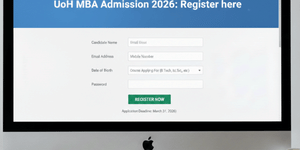
UoH opens MBA Admission 2026: Steps to Apply, Eligibility Criteria
UoH MBA Admission 2026: The University of Hyderabad (UoH) has started the online registration process for MBA Admission 2026, seeking applications for its two-year MBA course (2026-28 batch). Candidates interested in pursuing a management course can now apply through the official admission portal of the university. The total number of seats available for the course is 75. Candidates interested in the course are required to apply online on or before January 31, 2026. The admissions will be conducted based on the eligibility criteria and performance in the selection process, as announced by the university.

List of MBA Colleges Accepting 60-70 Percentile in CMAT 2026
The list of MBA colleges accepting 60-70 percentile in CMAT 2026 highlights recognised names such as DY Patil Mumbai, Universal Business School, Institute of Management Christ University, Jagannath International Management School Delhi, IMS Ghaziabad, etc. These institutes usually grant admission to the management programmes based on a CMAT percentile range between 60 and 70 and are known for providing quality education through the latest academic frameworks and industry-oriented exposure.
A CMAT score ranging from 141 to 170 out of 400 generally corresponds to the 60–70 percentile bracket. Although these colleges may not be the first choice for those scoring above 90 or 95 percentile, aspirants securing a percentile in the said band still have access to several respectable MBA options. Majority of these colleges provide career-focused programmes, practical learning opportunities, regular industry exposure, and well-maintained campus facilities.

List of MBA Colleges Accepting 80-90 Percentile in CMAT 2026
The list of MBA colleges accepting 80-90 percentile in CMAT 2026 features names such as Welingkar, Great Lakes Institute of Management, St. Xavier’s University, and IMT Nagpur. These institutes are known for industry-relevant MBA programmes, having experienced faculty, reliable campus facilities, and strong placement assistance. Although they may not be among the options available in the 99+ percentile category, they remain strong options for aspirants seeking a recognised and career-focused management degree.
The CMAT 2026 exam was conducted by NTA on January 25, 2026, across more than 100 CMAT exam centres nationwide. CMAT 2026 results are likely to be launched in the second/ third week of February 2026. Having an idea of this 80-90 percentile-based college list is especially useful for shortlisting options for CMAT aspirants.

BHU MBA-IB Registration 2026: Apply Online, Fees, Important Instructions
BHU MBA-IB 2026 Registration is ongoing, and the last date to submit your applications is January 31, 2026. Banaras Hindu University, through its Management Institute, offers an MBA in International Business. It is a two-year full-time program for executives who want to build a comprehensive global management perspective. This program focuses on different specializations such as Global Business Operations, Marketing, Finance, Human Resource Management, Information Technology, and Operations Management. There are currently 59 seats available for the MBA-IB program for the 2026 batch.
What is a Good Score in CMAT 2026?
If you’ve been wondering what is a good score in CMAT 2026 exam, the general benchmarks are already quite clear. A score in the bracket of 295 and 345+ is considered good enough to secure a 90 to 99.99 percentile, which is widely regarded as an excellent performance. Those seeking to join institutes like JBIMS, SIMSREE, SIES, BIMTECH, JAGSoM, etc, must note that the target score is typically higher, typically between 290 and 360 marks, which often aligns with a 98 to 99.99+ percentile.
The CMAT 2026 exam was conducted on January 25, 2026, and was of an easy-to-moderate level. Knowing the CMAT cutoff trends helps them to prepare accordingly and know a realistic range to gain admission to their desired college. Also, it helps them understand how different score ranges translate into percentile brackets and which colleges fall within each band.
In this article, let's explore what counts as a competitive score for CMAT 2026.
Top Courses at Lloyd Business School
Related Questions
Related News






Similar Colleges





Explore More Engineering Colleges in Uttar Pradesh
By Degree
By Specialization
By Degree
By Specialization

